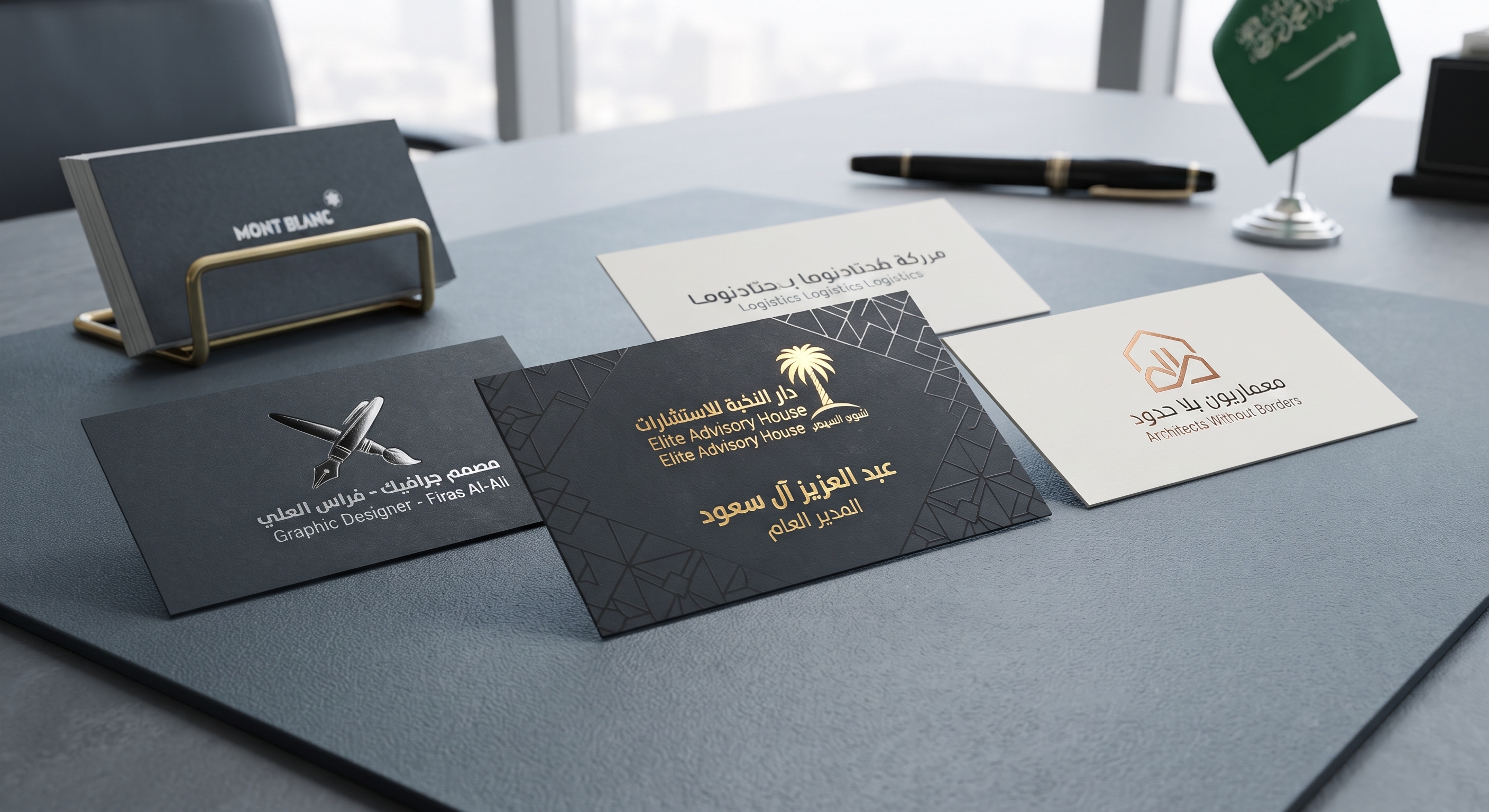
Your business card is often the first physical impression of your company. Whether you're meeting a procurement manager, visiting a corporate office, attending an exhibition, or introducing your services to a potential client, a professionally printed business card helps represent your brand.
But what makes a good business card? Is 350 GSM better than 300 GSM? Should you choose matte or glossy lamination? And are premium finishes such as Spot UV or gold foil worth the additional cost?
This guide explains the practical options available in the Saudi printing market and helps you choose the right specification.
What Is GSM in Business Card Printing?
GSM stands for grams per square metre. It measures the weight of paper, not its exact thickness. Paper composition and coating also affect how thick or rigid a card feels.
300 GSM Business Cards
300 GSM is a relatively economical cardstock option. It can be suitable for promotional cards, event handouts, and budget-conscious orders. The final stiffness depends on the paper grade.
350 GSM Business Cards
350 GSM coated cardstock is a widely offered specification among printing suppliers in Riyadh. It provides a practical balance between rigidity, print quality, and cost.
For many corporate teams, sales representatives, and everyday business networking requirements, 350 GSM with matte lamination is an excellent starting point.
400 GSM Business Cards
400 GSM cardstock generally provides a heavier feel. It is worth considering for executive business cards, premium brands, and businesses looking for a more substantial presentation.
Remember: a heavier card is not automatically a better card. Print quality, material selection, finishing, and cutting accuracy matter just as much.
Matte vs Glossy Lamination: Which Is Better?
Matte Lamination
Matte lamination produces a smooth, non-reflective appearance. It is particularly suitable for professional corporate identities, minimal designs, and cards with subtle colours.
Glossy Lamination
Glossy lamination creates a reflective finish that can make colours and photographs appear more vibrant. It works well for colourful designs, although reflections can make small text harder to read under certain lighting conditions.
Soft-Touch Lamination
Soft-touch lamination adds a smooth, velvety feel. It is a premium finishing option for businesses that want a distinctive tactile experience.
Premium Business Card Finishing Options
Spot UV
Spot UV applies a glossy coating to selected areas of a card, such as the company logo, brand pattern, or specific design elements. When combined with a matte background, it creates a noticeable contrast.
Gold or Silver Foil
Foil stamping adds metallic details to selected areas. It can suit luxury brands, premium hospitality businesses, and executive stationery.
Rounded Corners and Custom Shapes
Rounded corners and custom cutting can create a different appearance from traditional rectangular cards. Choose a shape that complements your branding without making the card inconvenient to carry.
What Business Card Size Is Common in Saudi Arabia?
Saudi printing suppliers commonly offer sizes such as 9 × 5.5 cm, 9 × 5 cm, and 8.5 × 5.5 cm.
Before preparing your artwork, confirm the final dimensions with your printing provider.
Should You Print Business Cards in Arabic and English?
For businesses operating in Saudi Arabia, bilingual business cards can be especially practical.
A well-organised bilingual card may include:
- Company name and logo
- Employee name and job title
- Mobile number and professional email
- Website address
- QR code linking to the company website or digital contact page
You can place Arabic on one side and English on the other, or use a carefully designed bilingual layout on the same side.
The most important requirement is readability. Avoid overcrowding the card with unnecessary information.
Digital Printing vs Offset Printing
Digital printing is generally suitable for smaller quantities, multiple employee names, and orders requiring flexibility.
Offset printing can become more economical for larger quantities of identical designs, depending on production setup and finishing requirements.
For companies ordering business cards for multiple departments or employees, discuss the quantity per name before selecting the printing method.
How to Prepare Your Business Card Artwork
Before sending your business card for printing:
- Use the exact finished size confirmed by your printer.
- Prepare artwork at suitable print resolution, typically 300 DPI for raster elements.
- Use CMYK colour settings according to the printer's requirements.
- Include the requested bleed, commonly 3 mm.
- Keep important text and logos inside the safe margin.
- Export a print-ready PDF with fonts embedded or correctly outlined.
- Carefully check names, job titles, Arabic spelling, mobile numbers, and email addresses.
Always request or review a final proof before approving production.
Which Business Card Should You Choose?
For everyday corporate use, 350 GSM coated cardstock with matte lamination is a sensible starting point.
For a more substantial executive card, consider 400 GSM with a suitable premium finish.
For colourful promotional designs, glossy lamination may be appropriate.
For luxury presentation, carefully selected Spot UV, foil, or specialty paper can add distinction without overwhelming the design.
The best specification depends on your audience, branding, budget, and intended use.
Business Card Printing with Deem Prime in Riyadh
At Deem Prime Advertising & Printing, we understand that business stationery is part of your company's professional identity.
Whether you require business cards for your sales team, management, new employees, or corporate events, we can discuss your printing requirements, paper preferences, quantities, and suitable finishing options.
Our focus is on print quality, colour accuracy, professional presentation, and timely execution.
Looking for business card printing in Riyadh or elsewhere in Saudi Arabia?
Contact Deem Prime Advertising & Printing to discuss your requirements and request a quotation.
Website: www.deemprime.com
Frequently Asked Questions
Is 350 GSM good for business cards?
Yes. 350 GSM coated cardstock is a practical choice for many professional business cards, particularly when combined with suitable lamination.
Is 400 GSM better than 350 GSM?
400 GSM is generally heavier, but the better choice depends on your design, budget, paper quality, and desired presentation.
Which is better, matte or glossy business cards?
Matte is suitable for understated corporate designs, while glossy finishes can enhance colourful artwork. Neither is universally better.
Can I print Arabic and English on the same business card?
Yes. Both languages can appear on one side or be separated between the front and back, provided the layout remains clear.
What affects business card printing prices?
Quantity, paper stock, printing method, number of designs, lamination, specialty finishes, and delivery requirements can all affect the quotation.